
Is hawala legal in India? No. Moving money across borders through an informal, unlicensed network breaches the Foreign Exchange Management Act, 1999, and when the money is linked to crime, it can bring the Prevention of Money Laundering Act into play too. The system is old, fast and trust-based, but it works outside the banking channels Indian law requires.
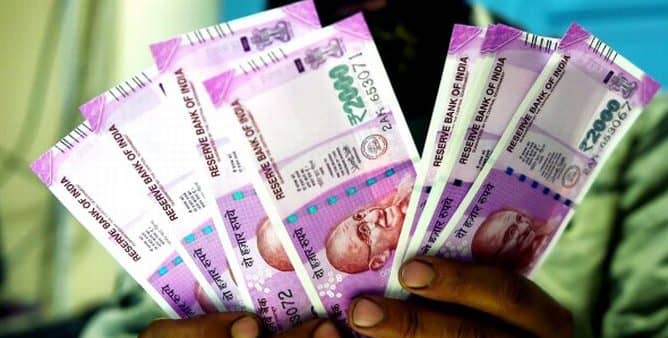
Hawala in One Look
- What it is: An informal system that moves value without moving money through banks. INTERPOL describes it as “money transfer without money movement.”
- Main law: FEMA, 1999. Only authorised persons may deal in foreign exchange.
- Penalty: Up to three times the amount involved. Civil imprisonment is possible if an adjudicated penalty isn’t paid within 90 days.
- Criminal side: PMLA applies when the funds are proceeds of crime. Preventive detention under COFEPOSA has also been used.
- Recent enforcement: ED searches on money changers in July 2026 and a hawala operator’s arrest in September 2026.
What Hawala Actually Is
A sender hands cash to an operator in one country. The operator instructs a counterpart in another country to pay the recipient, and the two settle later, often through trade invoices or reverse flows. No bank records the transfer.
One explainer notes that hawala isn’t inherently illegal as a concept, and that it’s its use for money laundering, terror financing and tax evasion that worries enforcement agencies. In India, though, the law is plain on the practical point: cross-border remittances outside authorised channels violate FEMA.
FEMA: Civil, But Not Soft
FEMA replaced the stricter FERA in 1999 and made most violations civil. Officials worried at the time that this would encourage hawala, because the penalty of three times the amount involved wasn’t a sufficient deterrent.
Today’s position:
- Only authorised persons, such as banks and RBI-authorised dealers, may deal in foreign exchange or transfer money to or from abroad.
- A contravention can draw a penalty of up to three times the amount involved.
- If a penalty isn’t paid within 90 days of the notice, Section 14 allows civil imprisonment.
- Under Section 37A, the ED can seize assets in India, according to one analysis.
The Criminal Layer
Delhi High Court held in 2025 that FEMA doesn’t give immunity from prosecution for IPC offences arising from the same acts. The case involved alleged hawala transactions of about ₹3,500 crore routed abroad using fabricated documents to remit money to companies in Hong Kong and Canada. The ED had searched the accused under FEMA in May 2024, and after an FIR on predicate offences, arrested them under the PMLA.
So a hawala case can run on several tracks at once: a FEMA civil penalty, a criminal FIR, and a PMLA money laundering case. The ED has also used the preventive detention law, COFEPOSA. In September 2023, it detained five people in Kerala over alleged international hawala operations above ₹300 crore.
How Hawala Hides
Enforcement actions show the pattern:
- Shops as fronts: In Kerala raids in 2023, the ED said hawala was allegedly conducted in the guise of forex exchange, gift shops, textile and jewellery shops, with illegal dealings taking no KYC and issuing no bills.
- Shell entities and fake IDs: In a north India case, forex firms allegedly sent over ₹475 crore abroad to Singapore, Hong Kong and the UAE for dummy travel companies using fake IDs. The ED seized ₹3.88 crore in cash and currency and ₹24.2 lakh in bullion.
- Trade-based laundering: An international drug money case involved alleged trade-based laundering run from Amritsar.
- Licensed money changers: In July 2026, the ED searched full-fledged money changers and their franchisees in Delhi, Rishikesh and Dehradun over alleged unauthorised forex and hawala transactions, and breaches of RBI Master Directions.
The surprise: a licence doesn’t protect an entity that goes beyond what the licence allows.
Hawala and Serious Crime
Hawala routinely turns up in cases about drugs, terror financing and tax evasion. In September 2026, the ED arrested hawala operator Gaurav Dawar under the PMLA in a case tracing back to an NIA FIR under UAPA and NDPS laws. The agency said it had uncovered ₹89 crore in criminal proceeds, including ₹74 crore of hawala identified by the NIA.
That’s why courts and agencies treat hawala as more than a currency violation.
Domestic “Entry” Hawala
Not every case involves foreign exchange. The Income Tax Department has run searches against “entry operators,” which it calls a hawala-like operation: fake bills, accommodation entries and shell firms used to generate unaccounted cash. One action involved cash seizures of at least ₹62 crore and entries worth more than ₹500 crore. These cases are tax evasion matters, separate from cross-border hawala.
What Customers Risk
Most guides focus on operators, but the senders and recipients aren’t safe either. FEMA regulates “persons,” and a transfer outside authorised channels is itself a contravention. If the money is proceeds of crime, anyone knowingly involved can be drawn into a PMLA case. Common risks:
- Penalty proceedings and asset attachment.
- Frozen bank accounts.
- Tax scrutiny of the source of funds.
- Loss of the money, since hawala gives you no legal remedy if an operator disappears.
Legal Ways to Move Money
- Bank wire (SWIFT) through an authorised dealer bank.
- RBI-authorised money transfer operators and authorised money changers.
- The Liberalised Remittance Scheme, up to $250,000 a year for permitted purposes.
- For freelancers and exporters, authorised channels with an e-FIRA or FIRC.
- For businesses, trade finance through banks with proper documentation.
FAQs
Q1. Is it illegal to send money abroad through a hawala operator?
Yes. FEMA lets only authorised persons deal in foreign exchange, so unauthorised cross-border transfers contravene it, with penalties up to three times the amount involved.
Q2. Can I go to jail for using hawala?
FEMA penalties are civil, but jail can follow if you don’t pay an adjudicated penalty within 90 days, or if PMLA or other criminal laws apply because funds are proceeds of crime.
Q3. What are legal ways to send money abroad?
Use banks, RBI-authorised money transfer operators or authorised dealers, within limits such as the $250,000 annual LRS cap and for permitted purposes only.
Q4. Are licensed money changers safe from hawala charges?
No. In July 2026 the ED searched full-fledged money changers and franchisees in Delhi and Uttarakhand over alleged unauthorised forex dealings and hawala. A licence doesn’t cover transactions outside its terms.
Q5. Is cash “entry” hawala within India also illegal?
Accommodation entries and fake billing used to generate unaccounted cash are tax evasion, targeted in Income Tax Department searches that have seized crores. They’re separate from cross-border hawala but equally risky.