
Genda Circle Morbi Gujarat sits in the commercial heart of a city that tiles the floors of homes across 163 countries. Morbi — officially upgraded from a municipality to a full municipal corporation in January 2025 — is India’s ceramics capital, producing an estimated 80–90% of the country’s ceramic tiles and sanitaryware from over 1,000 factories concentrated along the Machhu River basin. The Genda Circle address is Morbi-2, Taluka Morvi, Morbi district, Gujarat, PIN code 363641, with Morbi Shakti Plot as the post office. NH-151A and NH-41 are both accessible from the circle’s road network. The Pushpavati and Unad rivers run through the broader district geography, with the Machhu River — around which the city’s identity and its worst tragedies have both formed — flowing directly through Morbi town.
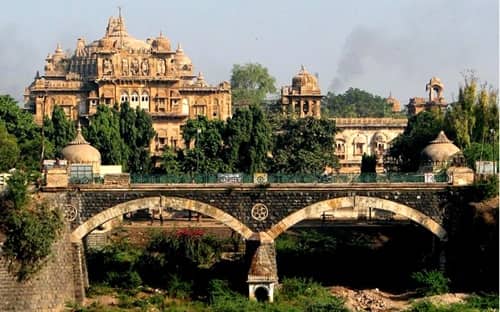
Location and Administrative Details
Morbi sits on the Kathiawar peninsula of Saurashtra, 60 km from Rajkot and 35 km from the Arabian Sea. The city was founded around 1698 as a princely state by Jadeja Thakor Saheb Shree Kayoji Ravaji, and its name — literally meaning “city of peacocks” — likely derives from the king of Bhuj. Morbi district was created on 15 August 2013, comprising five talukas: Morbi, Maliya, Tankara, Wankaner, and Halvad.
Genda Circle falls within the Morbi Assembly Constituency, represented by MLA Amrutiya Kantilal Shivlal. The Lok Sabha constituency is Kutch, with MP Chavda Vinod Lakhamshi. Morbi Railway Station is one of the nearest rail points, with Nazarbag also accessible. The nearest major railway junction is Wankaner, approximately 27 km away and one of the district’s two railway junctions alongside Maliya-Miyana. Wankaner is on the main line with services toward Rajkot. Rajkot Airport is approximately 67 km from Morbi — the nearest functional airport — with Ahmedabad’s international airport approximately 247 km away.
The Ceramics Economy — What Actually Happens Here
Morbi’s ceramic cluster is among the most concentrated industrial agglomerations in India. From the Genda Circle zone, the industrial belt extends in multiple directions — factories producing floor tiles, wall tiles, porcelain slabs, digital-print ceramic panels, and sanitaryware that ship globally through Mundra and Kandla ports, both within same-day trucking distance. The sector produces ceramics worth approximately ₹65,000–70,000 crore annually, with around ₹20,000 crore exported. In 2024, Morbi exported to 163 countries with porcelain stoneware accounting for over 75% of export value.
Technology adoption in Morbi’s factories has been rapid: over 200 units now use digital inkjet printing for large-format slabs up to 1,600×3,200 mm, rivalling Italian designs. Energy-efficient roller kilns with waste-heat recovery and AI-driven controls have reduced carbon emissions by approximately 20% across modern facilities. Solar energy powers around 25% of production. Subsidised natural gas and established supply chains for feldspar and quartz give Morbi manufacturers a cost advantage estimated at $4–6 per square metre compared to competitors in other Indian regions.
In 2025, however, the industry faces serious headwinds. The West Asia conflict and disruption to the Strait of Hormuz created a propane and natural gas supply crisis for the kiln-dependent factories, with significant units halting production. In March 2026, a report confirmed the ₹65,000 crore ceramic hub was under direct threat from fuel supply disruption. This is not a seasonal dip — it is a structural vulnerability in an industry built on energy-intensive high-temperature firing.
The Jhulto Pul and the Shadow of 2022
Morbi’s name carries a weight since 30 October 2022 that no industrial achievement can fully displace. The Jhulto Pul — the 19th-century pedestrian suspension bridge over the Machhu River — collapsed five days after reopening following repairs, killing 141 people and injuring over 180. The bridge, operated by private trust Oreva under a municipal contract, had reopened just in time for Diwali and the Gujarati New Year. The disaster fundamentally altered how Morbi’s civic governance, heritage infrastructure maintenance, and private contractor accountability are viewed nationally.
- The city, its ceramics industry, and its residents have pressed forward. In January 2025, Morbi was elevated to municipal corporation status — a civic upgrade reflecting population and economic growth. The Genda Circle zone carries the daily commerce of a city that has rebuilt its civic identity without fully escaping the shadow of that October evening.
Connectivity and Civic Life
NH-151A and NH-41 give Morbi good road connectivity toward Rajkot, Wankaner, and the broader Saurashtra highway network. GSRTC buses connect the city to Rajkot, Ahmedabad, Surendranagar, and other Gujarat urban centres. The Machhu River, which twice flooded Morbi with devastating effect in the 20th century, remains a defining feature of the city’s geography and flood preparedness planning.
FAQs About Genda Circle Morbi Gujarat
Q1. What is the pincode of Genda Circle Morbi?
A: PIN code 363641, with Morbi Shakti Plot as the post office. The area falls in Morvi Taluka, Morbi district.
Q2. Why is Morbi called the ceramics capital of India?
A: Morbi produces 80–90% of India’s ceramic tiles and sanitaryware from over 1,000 factories, exporting to 163 countries. Annual sector turnover is approximately ₹65,000–70,000 crore, making it one of India’s largest single-product industrial clusters.
Q3. What is the nearest railway station to Genda Circle Morbi?
A: Morbi Railway Station is the nearest. Wankaner Junction, approximately 27 km away, is the major rail hub on the main line with broader connectivity to Rajkot and beyond.
Q4. Which airport serves Morbi?
A: Rajkot Airport is the nearest, approximately 67 km away. Ahmedabad’s Sardar Vallabhbhai Patel International Airport is approximately 247 km — used for international connectivity.
Q5. What is the 2022 Morbi bridge collapse and what happened?
A: On 30 October 2022, the Jhulto Pul — a 19th-century pedestrian suspension bridge over the Machhu River — collapsed five days after reopening following repairs, killing 141 people. The bridge was operated by private trust Oreva under a municipal contract. It remains one of the deadliest bridge disasters in India’s recent history.