
No, deer meat (venison) is illegal in India for virtually all practical purposes. Hunting, possessing, selling, buying, or consuming deer meat is prohibited under India’s wildlife conservation law, and the penalties for violating this are genuinely severe. This is one of the more unambiguous wildlife legal questions in India — there’s no general exception for personal consumption, no legal commercial market, and no straightforward way to access deer meat through licensed sale.
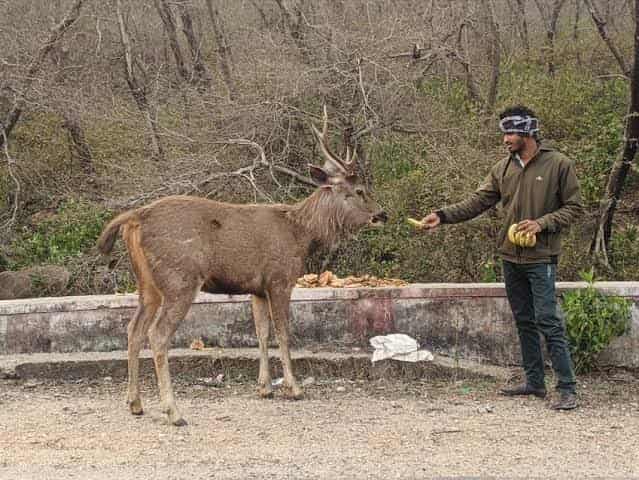
The Governing Law: Wildlife Protection Act, 1972
- India’s wildlife conservation framework rests on the Wild Life (Protection) Act, 1972, most recently amended in 2022, which elevated protection for several species and introduced tougher penalties.
- Most deer species found in India are listed under Schedule I or Schedule II of the Act, the categories that confer the highest levels of legal protection available under Indian wildlife law — the same tier that covers many of India’s most strictly protected wild animals.
- Under Section 39 of the Wildlife Protection Act, wild animals and their products — including meat — are legally treated as government property. This is a genuinely important legal principle: it means deer meat isn’t simply “restricted” the way a regulated commercial product might be, it’s treated as belonging to the state, making unauthorized possession or trade a direct violation rather than a licensing technicality.
No Meaningful Exceptions for Ordinary Citizens
This is where the law is particularly unambiguous, and it’s worth being direct about it.
- The Wildlife Protection Act contains very limited exceptions overall, and critically, there are no exceptions for commercial deer farming, importation of deer meat for consumption, or ordinary civilian hunting of any deer species.
- Commercial deer farming in India is not permitted under the Wildlife Protection Act. This directly addresses a claim you’ll sometimes see online — that licensed deer farming offers a legal pathway to venison — which doesn’t hold up against the Act’s actual provisions; no general commercial farming exception exists that would let an ordinary business breed and sell deer meat.
- Hunting deer is effectively prohibited across the board for ordinary citizens. The narrow exceptions that exist in the Wildlife Protection Act generally relate to very specific, government-authorized circumstances — such as culling animals officially designated as “vermin” in a specific region, or special permits issued to deal with a genuinely dangerous animal (like a confirmed man-eater) that has failed to be captured through non-lethal means. These exceptions have nothing to do with recreational hunting or meat sourcing, and don’t create any pathway for a private individual to legally hunt deer for consumption.
Trade in Deer Products Beyond Just Meat
The prohibition extends well beyond the meat itself.
- Trade in deer products — including skin, antlers, and bones — is illegal under the Wildlife Protection Act, not just the meat. This reflects the broader principle that the entire animal and everything derived from it falls under the same protected status.
- Importing venison from abroad for consumption in India is also illegal, since the protected status attaches to the species and product category itself, not just to domestically sourced meat — bringing legally hunted or farmed venison in from another country doesn’t create a legal pathway around India’s own restrictions.
Why It Still Sometimes Surfaces Illegally
Despite this clear legal position, deer meat does occasionally appear in illegal wildlife markets in cities, including Delhi, Bengaluru, and Mumbai. This reflects ongoing illegal poaching and trafficking activity rather than any legitimate legal channel — forest and wildlife officials conduct raids specifically targeting this kind of illegal wildlife trade, and anyone involved, whether buying, selling, or possessing such meat, is exposed to genuine legal risk regardless of how the product is marketed or where it’s sourced from.
Penalties for Violating These Provisions
Given deer’s protected status, violations carry serious consequences:
- Penalties for illegal hunting, possession, or trade of protected wildlife, including deer, can include significant fines and imprisonment, with some sources citing potential imprisonment of up to seven years for serious violations under the Wildlife Protection Act.
- Beyond criminal penalties, confiscation of the meat itself, along with any hunting equipment used, is standard enforcement practice.
- The 2022 amendment to the Wildlife Protection Act specifically strengthened penalties for offences involving protected species, reflecting a legislative trend toward tougher, not looser, enforcement.
Why the Law Treats Deer This Way
The underlying rationale, consistent across legal and conservation commentary, centers on genuine population vulnerability:
- India’s wild deer populations have faced significant pressure from habitat loss and historical poaching, making many species genuinely vulnerable rather than abundant.
- Demand for venison, both domestic and driven by illegal international trade, has historically fueled poaching activity, which is precisely the dynamic the Wildlife Protection Act’s strict, near-blanket prohibition is designed to interrupt by removing any legal market that could provide cover for illegally sourced meat.
Frequently Asked Questions
Q1. I’ve seen claims online that licensed deer farming provides a legal source of venison in some Indian states — is this accurate?
This claim circulates in some less authoritative sources, but it doesn’t align with the Wildlife Protection Act’s actual provisions, which explicitly do not include a general exception for commercial deer farming; the more detailed, legally specific analysis consistently confirms there’s no broad, nationwide legal pathway to farmed venison, so this claim should be treated with real skepticism rather than assumed accurate.
Q2. Are all deer species in India equally protected, or are some less restricted than others?
Most deer species found in India fall under Schedule I or Schedule II of the Wildlife Protection Act, the highest protection tiers, though the Act does organize species across five schedules with somewhat varying penalty levels — in practice, this means the core prohibition on hunting, trade, and consumption applies broadly across essentially all deer species a person would realistically encounter in India.
Q3. If I’m caught possessing deer meat that I claim was given to me by someone else, am I still liable?
Yes — possession itself is a violation under the Wildlife Protection Act regardless of how you obtained the meat, since wild animal products are treated as government property under Section 39, meaning simply having deer meat in your possession without proper legal authorization exposes you to liability, not just the original act of hunting or selling it.
Q4. Does India’s deer meat ban apply uniformly across all states, including rural and forest areas?
Yes — the Wildlife Protection Act is a central law that applies uniformly across India, including rural villages and forest regions, so there’s no state or local exception that permits deer hunting or meat consumption outside the narrow, government-authorized circumstances (like official vermin culling or specific dangerous-animal permits) built into the Act itself.