
Homemade pizza dough is the foundation of a delicious pizza. While store-bought dough is convenient, making pizza dough from scratch gives you complete control over the ingredients, texture, and flavor. With just a few pantry staples, you can prepare soft, stretchy dough that bakes into a crispy crust with a light and airy interior. Whether you’re making a classic Margherita, veggie-loaded pizza, or a cheesy delight, homemade dough can elevate your pizza night.
In this guide, you’ll learn how to make homemade pizza dough step by step, along with useful tips for achieving the perfect crust every time.
Ingredients
To make one large pizza or two medium pizzas, you’ll need:
- 3 cups all-purpose flour (or bread flour for a chewier crust)
- 1 cup warm water (about 40–43°C)
- 2¼ teaspoons active dry yeast (1 packet)
- 1 teaspoon sugar
- 1 teaspoon salt
- 2 tablespoons olive oil
These simple ingredients create a soft, elastic dough that is easy to work with.
Step 1: Activate the Yeast
In a small bowl, combine the warm water, sugar, and active dry yeast. Stir gently and let the mixture sit for 5–10 minutes.
The yeast should become foamy on the surface. This indicates that the yeast is active and ready to use. If no foam appears, the yeast may be expired, or the water may have been too hot or too cold.
Step 2: Mix the Dough
In a large mixing bowl, combine the flour and salt. Make a well in the center and pour in the activated yeast mixture along with the olive oil.
Mix everything together using a wooden spoon or your hands until a rough dough forms.
If the dough feels too sticky, add a little more flour, one tablespoon at a time. If it feels too dry, add a small amount of warm water.
Step 3: Knead the Dough
Transfer the dough to a lightly floured surface and knead it for 8–10 minutes.
Proper kneading develops gluten, giving the dough its stretchy texture and chewy crust.
The dough is ready when it becomes:
- Smooth
- Soft
- Elastic
- Slightly springy when pressed
Avoid adding too much flour while kneading, as this can make the crust dense.
Step 4: Let the Dough Rise
Lightly grease a clean bowl with olive oil and place the dough inside. Cover it with a damp cloth or plastic wrap.
Leave the bowl in a warm place for about 1–2 hours, or until the dough doubles in size.
During this time, the yeast produces gas, making the dough light and airy.
Step 5: Punch Down the Dough
Once the dough has doubled in size, gently press it down to release excess air bubbles.
Transfer it to a floured surface and divide it into portions if making multiple pizzas.
Let the dough rest for another 10–15 minutes before shaping. This makes it easier to stretch.
Step 6: Shape the Pizza
Using your hands or a rolling pin, stretch the dough into your desired shape.
For a traditional pizza:
- Keep the center thin.
- Leave the edges slightly thicker for a fluffy crust.
- Avoid pressing too hard around the edges.
Place the shaped dough on a pizza tray, baking sheet, or pizza stone.
Step 7: Add Toppings
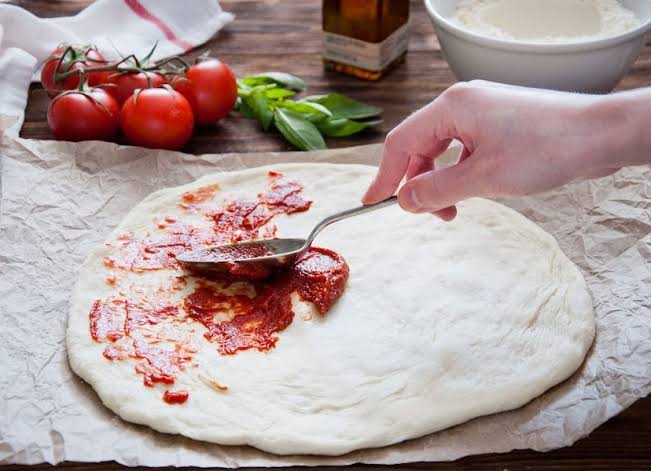
Spread pizza sauce evenly over the dough, leaving a small border around the edges.
Add your favorite toppings, such as:
- Mozzarella cheese
- Bell peppers
- Onions
- Mushrooms
- Tomatoes
- Olives
- Corn
- Jalapeños
- Paneer
- Chicken or pepperoni (optional)
Finish with herbs like oregano, basil, or chili flakes for extra flavor.
Step 8: Bake the Pizza
Preheat your oven to 220–250°C (425–475°F) for at least 20 minutes.
Bake the pizza for 10–15 minutes, depending on the thickness of the crust and your oven.
The pizza is ready when:
- The cheese is melted and bubbly.
- The crust is golden brown.
- The bottom is crisp.
Allow the pizza to cool for a couple of minutes before slicing and serving.
Tips for Perfect Homemade Pizza Dough
For the best results, keep these tips in mind:
- Use fresh yeast for proper rising.
- Bread flour creates a chewier crust than all-purpose flour.
- Don’t rush the rising process.
- Preheat the oven thoroughly before baking.
- A pizza stone helps create an extra crispy base.
- Brush the crust with olive oil before baking for added flavor and color.
- Avoid adding too many wet toppings, as they can make the crust soggy.
Can You Store Pizza Dough?
Yes. Homemade pizza dough stores well.
- Refrigerator: Store in an airtight container for up to 3 days.
- Freezer: Freeze for up to 3 months. Thaw overnight in the refrigerator before use.
Allow refrigerated dough to come to room temperature before stretching.
Benefits of Homemade Pizza Dough
Making pizza dough at home offers several advantages:
- Uses simple and fresh ingredients.
- No artificial preservatives.
- Customizable thickness and texture.
- More economical than store-bought dough.
- Suitable for various toppings and recipes.
- Freshly baked flavor and aroma.
Conclusion
Making homemade pizza dough is easier than it may seem and requires only a handful of basic ingredients. By activating the yeast correctly, kneading the dough thoroughly, allowing enough time for it to rise, and baking it at a high temperature, you can achieve a delicious pizza crust that rivals your favorite pizzeria. Whether you prefer a thin, crispy base or a soft, fluffy crust, homemade dough gives you the flexibility to create the perfect pizza every time. With a little practice, you’ll enjoy fresh, flavorful homemade pizzas that your family and friends will love.