
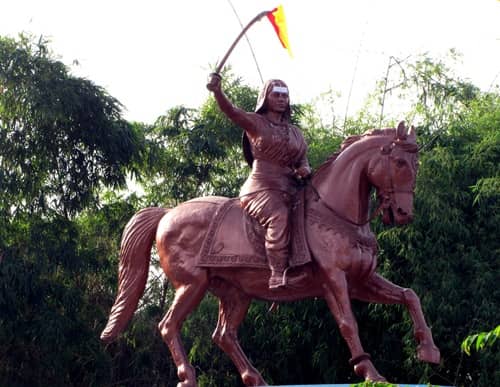
Kittur Rani Chennamma Circle Belagavi bears one of the most historically weighted names of any circle in this series. Rani Chennamma was not merely a regional queen — she led the first organised armed rebellion against the British East India Company in 1824, three decades before the 1857 uprising, and she was a woman. Her victory in the first battle of Kittur, where British collector St John Thackeray was killed, sent reverberations through colonial South India. The circle’s address is Khade Bazar, Raviwar Peth, Belagavi, Belgaum, Karnataka 590001, under the Belgaum post office. There is also a second Rani Chennamma statue address at Sadashiv Nagar, Belagavi 590019. The circle’s elevation is 752 metres — Belagavi’s elevated Deccan plateau setting that gives the city its distinctive cool climate relative to the Karnataka coast.
Who Was Rani Chennamma — The Full Story
Born on 23 October 1778 in Kakati village in the present-day Belagavi district to a Lingayat family, Chennamma was trained from childhood in horse riding, sword fighting, and archery. She married Raja Mallasarja of Kittur at the age of 15. After her husband died in 1816 and her biological son died young, she adopted Shivalingappa as heir to the Kittur throne. The British East India Company, applying the Doctrine of Lapse — by which states without a male natural heir could be annexed — refused to recognise the adoption. Collector St John Thackeray declared the adoption a fraud and attacked Kittur in October 1824.
In the first encounter, Rani Chennamma’s forces routed the British attackers. Thackeray was killed — killed in battle, not in a skirmish, by an organised army under Chennamma’s command. Several British officers were captured. The victory reverberated across South India and inspired local rulers and peasants to challenge British dominance.
The British retaliated with reinforcements from Bombay — a force of 20,000 men and 400 guns from the Madras Native Horse Artillery. Despite valiant resistance, Kittur’s forces were outnumbered. Betrayal from within weakened the defence. Rani Chennamma was captured in December 1824 and imprisoned at Bailhongal Fort. She died in captivity on 21 February 1829, aged 51, having spent her final years writing letters pleading for the release of her adopted son and the protection of her people.
She is considered India’s first woman freedom fighter. The Kittur Revolt of 1824 is the first major armed rebellion against the British in South India.
2024–2025: The 200-Year Commemorations
The 200th anniversary of the Kittur Revolt was commemorated with national attention in 2024–25. The Government of India released a special ₹200 commemorative coin marking 200 years of Rani Chennamma’s victory. A commemorative postage stamp was issued by the Department of Posts. The Indian Coast Guard had previously commissioned a ship named Kittur Chennamma (1983–2011). The Rani Chennamma Express rail service connecting Bengaluru and Sangli carries her name. Her statue stands in the Parliament complex in New Delhi, unveiled in 2007 by President Pratibha Patil. The Kittur Utsava — an annual festival held every 22–24 October to commemorate the revolt — saw its 2025 edition span three days with improved facilities and national recognition. In March 2025, Karnataka CM Siddaramaiah formally requested PM Modi to designate Rani Chennamma’s samadhi at Bailhongal as a national monument.
The Circle’s Location and Daily Character
The Kittur Rani Chennamma Circle in Belagavi stands at what was historically called the Traffic I-Land — a major entry junction to Hubballi and a primary navigation point near the Old Bus Stand. The statue of Rani Chennamma at the circle is large and prominently visible, and was the filming location for a famous song featuring Dr Rajkumar — a scene from a Kannada film celebrating Karnataka’s identity that generations of Kannadigas know. The circle connects to multiple Belagavi road corridors. An Idgah Maidan is adjacent, reflecting the mixed cultural character of this border district where Kannada, Marathi, and Urdu coexist historically. Dharwad Peda vendors near the circle and the Kamat Hotel are immediate food landmarks.
Belagavi itself sits at 752 metres at the edge of the Western Ghats and the Deccan Plateau, historically a garrison town and now one of north Karnataka’s most significant urban centres. Belagavi Airport is approximately 13 km from the city centre. Belagavi Railway Station connects to Bengaluru, Pune, Hyderabad, and Mumbai. Rani Chennamma University in Belagavi is a named institution continuing the queen’s memorial legacy in higher education.
FAQs About Kittur Rani Chennamma Circle Belagavi
Q1. Who was Kittur Rani Chennamma and why is the circle named after her?
Rani Chennamma (1778–1829) was the queen of Kittur who led the first organised armed rebellion against the British East India Company in 1824 — killing British Collector St John Thackeray in the first battle. She is recognised as India’s first woman freedom fighter, three decades before the 1857 uprising. The circle honours her legacy at this major Belagavi junction.
Q2. What is the pincode of Kittur Rani Chennamma Circle Belagavi?
PIN code 590001, Khade Bazar, Raviwar Peth, Belagavi. A second Rani Chennamma statue address in Sadashiv Nagar carries PIN code 590019.
Q3. What were the key commemorations of the 200th anniversary of the Kittur Revolt?
In 2024–25, the Government of India released a ₹200 commemorative coin, the Department of Posts issued a commemorative stamp, and Kittur Utsava 2025 spanned three days with national recognition. In March 2025, Karnataka CM Siddaramaiah requested the PM to designate Rani Chennamma’s samadhi at Bailhongal as a national monument.
Q4. What is the Kittur Utsava held near Belagavi?
An annual festival held every 22–24 October in and around Belagavi and Kittur to commemorate Rani Chennamma’s armed uprising against the British in 1824. The 2025 edition was expanded with improved facilities and national-level recognition.
Q5. What other public honours exist for Rani Chennamma beyond the Belagavi circle?
Her statue stands in the Parliament complex, New Delhi (unveiled 2007). The Rani Chennamma Express connects Bengaluru and Sangli. Rani Chennamma University is in Belagavi. The Indian Coast Guard ship Kittur Chennamma served 1983–2011. Statues exist in Bengaluru, Hubballi, Kittur, and Belagavi.