
The old mechanical meter spinning outside your house is quietly disappearing, replaced by a digital box that reports your electricity usage to the utility in real time — and behind that shift sits a genuinely fast-growing industry covered in this list of the top 10 smart meter manufacturers in India 2026. Daily installations have climbed from around 15,000 to over 1.12 lakh units under the government’s Revamped Distribution Sector Scheme, with a target of 250 million smart meters installed by March 2028.
For homeowners wondering why their meter suddenly changed, utilities managing massive rollout tenders, or anyone curious about who’s actually building this infrastructure, here’s a look at the manufacturers driving India’s transition away from manual meter reading.
| Company | Headquarters | Founded | Notable Detail |
| Genus Power Infrastructures | Jaipur, Rajasthan | 1995 | India’s undisputed market leader, ₹25,173 crore order book |
| HPL Electric & Power | Delhi NCR | 1975 | Wide electrical equipment and metering portfolio |
| Secure Meters | Udaipur, Rajasthan | 1965 | Created world’s first commercially viable electric meter |
| Schneider Electric India | Multiple locations | Global MNC | International technology, strong industrial backing |
| Landis+Gyr India | Multiple locations | Global MNC | Global AMI technology leader |
| Itron India | Multiple locations | Global MNC | Smart grid and metering technology specialist |
| Iskraemeco India | Multiple locations | Global MNC | European metering technology expertise |
| Capital Power Systems | Noida, Uttar Pradesh | Domestic | Large-scale domestic manufacturing base |
| Avon Meters | Domestic | Domestic | Utility-grade electronic energy meters |
| Polaris Smart Metering (formerly Gram Power) | Multiple locations | Domestic | AMISP operator across several states |
1. Genus Power Infrastructures
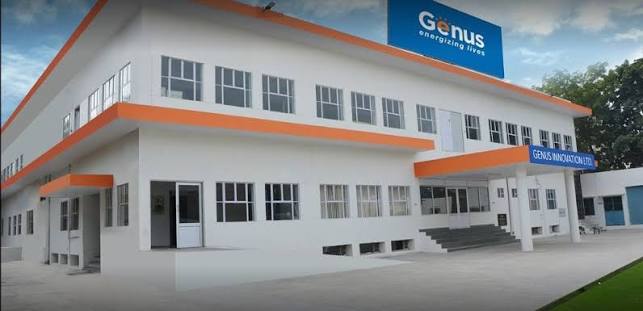
Genus Power isn’t just a participant in India’s smart meter rollout — it’s the company executing some of the largest advanced metering infrastructure projects in the world.
- Founded in 1995, headquartered in Jaipur, Rajasthan
- Reported Q4 FY2026 revenue of ₹1,523.7 crore, a 62.7% year-on-year jump
- Order book stood at approximately ₹25,173 crore as of March 31, 2026
- Has deployed one crore smart meters under RDSS as an AMISP (Advanced Metering Infrastructure Service Provider) across nine states
- 5 crore Genus smart meters currently operational, out of nearly 5.62 crore smart meters deployed nationwide
2. HPL Electric & Power
HPL brings decades of broader electrical equipment manufacturing experience into the smart metering space, rather than being a meter-only specialist.
- Long-established Indian electrical equipment manufacturer with a diversified product range
- Metering division benefits from the company’s existing distribution and manufacturing infrastructure
- Supplies both single-phase and three-phase metering solutions to utilities
- Established relationships with state electricity boards give it steady tender access
3. Secure Meters
Secure Meters carries a genuinely unique historical claim — it built the world’s first commercially viable electric meter, and that engineering pedigree still shapes the company today.
- Headquartered in Udaipur, Rajasthan
- Products installed in more than 60 countries, giving it serious international manufacturing credibility
- Offers advanced metering and monitoring solutions focused on energy efficiency
- One of India’s most technically accomplished domestic metering companies
4. Schneider Electric India
Schneider brings global energy management expertise into India’s smart metering rollout, backed by the parent company’s international R&D resources.
- Part of a globally recognized energy management and automation conglomerate
- Strong industrial manufacturing base within India supporting metering production
- Offers integrated solutions spanning smart meters and broader grid management technology
- Particularly relevant for utilities wanting metering solutions tied into wider smart grid infrastructure
5. Landis+Gyr India
Landis+Gyr operates as one of the genuine global leaders in advanced metering infrastructure technology, with its Indian operations tapping into that international expertise.
- Global AMI technology specialist with established Indian manufacturing presence
- Strong track record supplying utilities across multiple international markets
- Focus on communication-enabled metering technology suited to large-scale AMI rollouts
- Benefits from decades of global smart grid deployment experience
6. Itron India
Itron specializes specifically in smart grid and metering technology, positioning itself as a technology-first player rather than just a meter manufacturer.
- Global smart grid technology company with dedicated Indian operations
- Focus on data-driven metering solutions that support utility analytics and grid management
- Supplies both hardware and the software layer that makes advanced metering genuinely useful for utilities
- Relevant for utility tenders specifically prioritizing data integration capabilities
7. Iskraemeco India
Iskraemeco brings European metering technology and manufacturing standards to the Indian market, filling a niche among utilities wanting internationally certified equipment.
- European-origin metering technology company with Indian manufacturing operations
- Strong reputation for precision engineering in electricity metering
- Supplies both traditional and smart metering solutions to Indian utilities
- Competes primarily on technical certification and manufacturing quality standards
8. Capital Power Systems
Capital Power Systems represents the kind of domestic manufacturing capacity India’s massive rollout genuinely needs beyond just the largest brands.
- Based in Noida, Uttar Pradesh, with a significant manufacturing workforce
- Serves the utility metering market as part of India’s broader smart meter supply chain
- Important precisely because a 250-million-meter target can’t rely on just two or three manufacturers alone
- Continues operating as a working manufacturing facility supporting large-scale utility orders
9. Avon Meters
Avon Meters has built its position around dependable, large-quantity supply of electronic energy meters to Indian utilities.
- Focused specifically on electricity meters and electronic energy metering products
- Relevant to utilities needing manufacturers who can supply large quantities reliably
- Meets technical standards required for utility-grade metering deployment
- Represents the domestic manufacturing depth needed to support India’s rollout pace
10. Polaris Smart Metering (formerly Gram Power)
Polaris operates somewhat differently from pure manufacturers — it functions as an AMISP, managing smart metering deployment and power distribution modernization directly for utilities.
- Among the first companies appointed as an AMISP with REC (Rural Electrification Corporation)
- Awarded a 10-year contract to manage power distribution and smart metering across Ladakh and Kargil
- Selected as AMISP by MVVNL for the Gomati and Saryu regions, and by WBSEDCL for Hooghly district
- Also handles smart metering and distribution system enhancement for MSPDCL’s Sangai region
Understanding India’s Smart Meter Rollout
A few things worth knowing if you’re trying to make sense of this shift, whether as a consumer or someone tracking the industry:
- AMISP is different from a manufacturer — an Advanced Metering Infrastructure Service Provider like Polaris manages installation, billing integration, and ongoing operations, while manufacturers like Genus or Secure Meters actually build the hardware
- India has installed 6.13 crore smart meters by March 2026 — against a sanctioned base that’s significantly larger, meaning demand for manufacturers will likely stay strong for several more years
- Smart meters don’t inherently change your electricity rate — they measure and transmit usage more accurately and in real time, but the tariff structure itself is set by your state electricity board, not the meter manufacturer
- The market is growing rapidly — from roughly USD 219.7 million in 2023 to a projected USD 3,179.5 million by 2032, reflecting sustained government investment in grid modernization
- Rollout is state-by-state, not uniform — your area’s meter replacement timeline depends on which AMISP your state’s DISCOM has appointed and where that rollout currently stands
FAQs
Q1. Will installing a smart meter increase my electricity bill?
No, a smart meter itself doesn’t change your tariff rate — it simply measures and reports usage more accurately than older mechanical meters. Some users notice bill changes because smart meters eliminate estimation errors that previously worked in their favor, not because the meter charges differently.
Q2. What’s the difference between a smart meter and a net meter for rooftop solar?
A net meter specifically tracks the balance between electricity you consume and electricity your solar panels feed back into the grid. A smart meter measures consumption with real-time data transmission, and in many rollouts, smart meters are now being installed as net meters too, so they can later integrate with the broader AMI system once it’s established in that area.
Q3. How do I find out which company is installing smart meters in my area?
Your local DISCOM (Distribution Company) appoints a specific AMISP for your region, and this information is usually available on the DISCOM’s official website or through customer service. Checking there is more reliable than guessing based on which manufacturer’s meters you’ve seen installed in neighboring areas.
Q4. Can I request a smart meter installation before my area’s official rollout, or opt out if I don’t want one?
Rollout timing is generally determined by the DISCOM’s rollout plan and AMISP contract for your region, not individual consumer requests. Opting out entirely is typically not an option once your area is scheduled, since smart metering is being implemented as mandatory infrastructure under government distribution sector reforms.