
Walk through a heritage haveli in Rajasthan, and you’ll genuinely spot ornately carved wooden doors that have survived generations of use, still standing strong decades after installation. Walk into a modern Bangalore apartment, and you’ll almost certainly find sleek, flat flush doors instead, the practical choice that’s genuinely become the default across urban Indian homes since the 2000s. Both genuinely serve the same basic purpose, yet they represent fundamentally different philosophies about what a door should prioritise, timeless craftsmanship or practical, low-maintenance convenience.
Here’s why this decision genuinely deserves more thought than picking whichever your contractor stocks: wooden doors and flush doors aren’t simply different price points for the same product, they’re genuinely built through entirely different construction methods, one solid timber joined through traditional carpentry, the other a lightweight core sandwiched between engineered wood sheets. This fundamental difference genuinely explains everything else, cost, durability, maintenance, and which one actually suits your specific home and lifestyle.
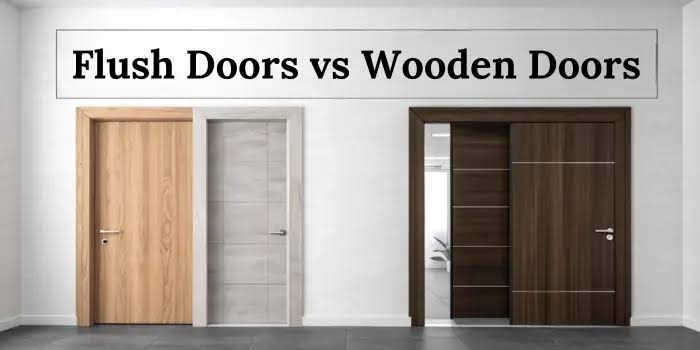
Why Their Construction Genuinely Explains Every Other Difference
This distinction matters before comparing anything else. Wooden doors are constructed entirely from solid timber using traditional joinery, vertical stiles and horizontal rails joined through time-tested techniques like mortise and tenon joints, with panels filling the spaces between these structural elements. Flush doors feature a genuinely different approach entirely, a lightweight or solid core sandwiched between engineered wood sheets like plywood or veneer, bonded together in a hot press process rather than assembled through traditional carpentry.
This genuine construction difference explains why wooden doors deliver superior natural durability and aesthetic detailing, while flush doors achieve their considerably lower cost and dimensional stability precisely because they’re manufactured from seasoned, chemically treated timber components rather than relying on a single solid piece of wood that’s genuinely more expensive and harder to source at scale.
Understanding the Genuine Cost Comparison
This gap is genuinely significant and worth budgeting around honestly. Flush doors typically cost ₹3,000 to ₹20,000 per door depending on core type and finish quality, while solid wooden doors range from ₹9,000 to ₹25,000 or more depending on the specific timber species chosen. This means flush doors genuinely offer considerably more accessible pricing for most Indian homeowners, particularly for interior doors where the premium wooden door’s aesthetic impact matters less than in a prominent, visible entrance.
It’s worth understanding that flush door pricing genuinely varies enormously based on core construction too, hollow-core doors sit at the cheapest end but sacrifice durability, while solid-core and premium dual-core constructions using dense wood cost considerably more but deliver genuinely better load-bearing capacity, sound insulation, and longevity than basic hollow-core alternatives.
Why Wooden Doors Genuinely Win on Durability and Longevity
This is genuinely where solid wood earns its premium price. Well-maintained wooden doors last 30 to 50 years, considerably outlasting quality flush doors, which typically achieve 15 to 25 years even with good care. Solid wood’s inherent strength genuinely makes it more suitable for stringent daily use conditions both inside and outside your home, handling heavy operation and impact considerably better than flush doors, particularly hollow-core variants, which are genuinely less rugged and may struggle under similarly demanding daily use.
This longevity advantage genuinely matters most for exterior doors and high-traffic entrances where you’re opening and closing the door constantly for decades, precisely the application where wooden doors’ structural resilience justifies their considerably higher upfront investment over a flush door that might need replacement two or three times across the same timeframe.
Why Flush Doors Genuinely Win on Maintenance and Moisture Resistance
This is where flush doors genuinely pull ahead for busy modern households. Flush doors need minimal upkeep, their smooth surface makes cleaning genuinely straightforward, while wooden doors require regular polishing and termite treatment to maintain both their appearance and structural integrity over time. This maintenance gap genuinely matters for anyone who doesn’t want an ongoing care routine added to their household responsibilities.
Perhaps more importantly for India’s climate specifically, BWP-grade, boiling water proof, flush doors genuinely outperform wooden doors in coastal and humid regions, where solid wood’s natural tendency to absorb moisture and expand can genuinely cause warping and structural issues over time. Flush doors manufactured with proper waterproof cross bands and phenol formaldehyde resin bonding genuinely resist this moisture-related degradation considerably better than untreated solid wood exposed to India’s humid monsoon conditions.
Why Aesthetic Preference Genuinely Depends on Your Home’s Style
It’s genuinely worth being clear that neither material universally wins on appearance, it depends entirely on your home’s design language. Wooden doors offer genuinely superior detailing and natural beauty through carved panels and traditional craftsmanship, making them the natural choice for heritage properties and luxury residences wanting a classic, timeless character. Flush doors deliver a genuinely clean, minimalist aesthetic that suits contemporary interiors perfectly, their flat, seamless surface aligning naturally with the sleek, uncluttered design language most modern Indian apartments and homes now favour.
Why Sound Insulation Genuinely Favours Flush Doors, Contrary to Assumption
This genuinely surprises many people who assume solid wood automatically means better soundproofing. Flush doors, particularly solid-core variants, are genuinely excellent insulators of sound, while traditional wooden doors, despite their substantial appearance, don’t insulate against noise nearly as effectively. This makes solid-core flush doors genuinely worth considering specifically for bedrooms or home offices where noise reduction matters more than the traditional wooden door’s classic aesthetic appeal.
Frequently Asked Questions
Q1. Which door type genuinely lasts longer, wooden or flush doors?
Wooden doors genuinely last considerably longer, typically 30 to 50 years with proper maintenance, compared to quality flush doors, which achieve 15 to 25 years, though flush doors require considerably less ongoing maintenance effort to reach that lifespan.
Q2. Are flush doors genuinely suitable for humid or coastal Indian homes?
Yes, genuinely, BWP-grade flush doors specifically outperform wooden doors in humid and coastal regions, since solid wood naturally absorbs moisture and can warp over time, while properly treated flush doors resist this moisture-related degradation considerably better.
Q3. Is it genuinely true that flush doors provide better sound insulation than solid wooden doors?
Yes, genuinely, this surprises many people, but solid-core flush doors are excellent sound insulators, while traditional wooden doors, despite feeling more substantial, don’t block noise as effectively, making flush doors worth considering specifically for bedrooms or spaces needing genuine noise reduction.
Q4. Should I choose wooden doors for my main entrance and flush doors for interior rooms?
This is genuinely a common and sensible approach, wooden doors’ superior durability and impressive aesthetic suit main entrances that face heavy daily use and visible presentation, while flush doors’ affordability and low maintenance work well for interior rooms where appearance matters less than practical, everyday convenience.